

Whose Story Are We Telling?
I have been paying attention to conversations about bullying in Oxford schools for a while now, and something has not been sitting right with me.
A lot of people in this community feel like bullying is a real issue. Kids talk about it. Parents talk about it. Community members bring it to board meetings. Board members themselves have said publicly that the numbers they are being shown do not line up with what they are hearing from families. At the same time, official reports continue to show extremely low numbers of bullying investigations.
That gap matters, because when people say they have been harmed and the system responds by saying it does not really count, trust breaks down. And in this community, trust is already fragile.
Since the school shooting, many families have taken a much closer look at safety policies and how they function in practice. We have learned that having policies on paper is not the same thing as implementing them well. We have also learned that confusion, inconsistency, or quiet filtering inside a system can have real consequences. So when questions come up about bullying data, reporting systems, and how concerns are handled, those questions are not coming out of nowhere. They are coming from lived experience.
What Students Reported in June 2025
In June of 2025, the district presented results from a bullying survey given to students in grades 3 through 12. More than 2,000 students participated across district buildings.
The results were not subtle.
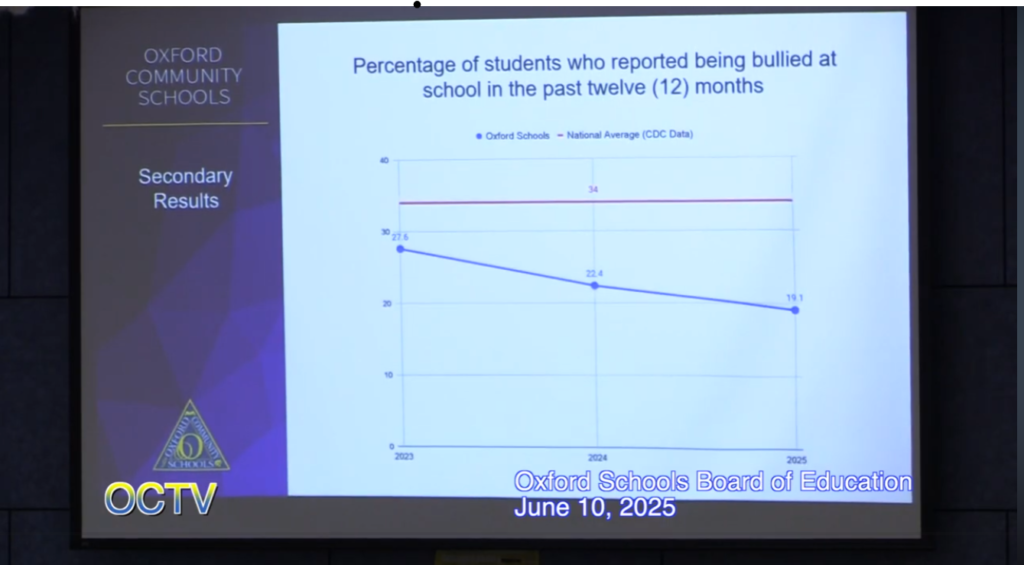
At the secondary level, nearly 1 in 5 students reported being bullied in the previous 12 months. That number went down from 27.5% in 2023. Among students with IEPs, that number rose to 29 percent. Among students who identified as a sexual orientation or gender minority, nearly 40 percent reported being bullied. At the elementary level, more than 35 percent of students reported being bullied.
Here is a number that should make anyone pause.
Only 54 percent of students who reported being bullied said they told someone about it at the middle and high school levels. Slightly higher numbers (62.1%) were reported for elementary students with a similar decline in overall reporting since 2023.
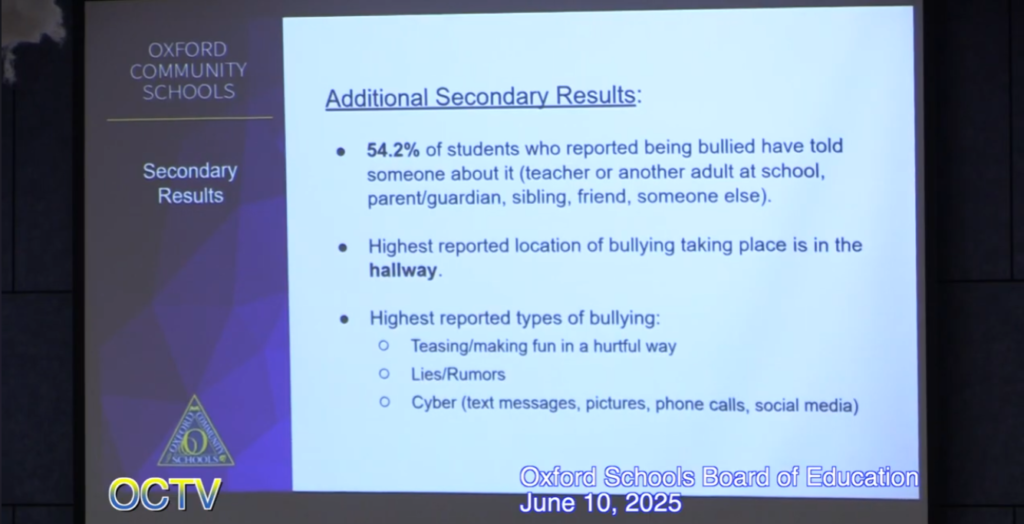
That means nearly half of students who said they were bullied did not report it to an adult at all.
The district framed this survey as a way to assess school climate, identify trends, and guide prevention efforts. That framing made sense. This data reflects student experience. It tells us how kids are actually feeling in school.
A Full School Year of Investigations: Seven Total. Zero Bullying.
Now here is where the story becomes uncomfortable.
During that same June 2025 meeting, the district also presented bullying investigation data covering the entire school year, from August 2024 through June 2025.
Across the entire district, there were seven bullying investigations.
Seven.
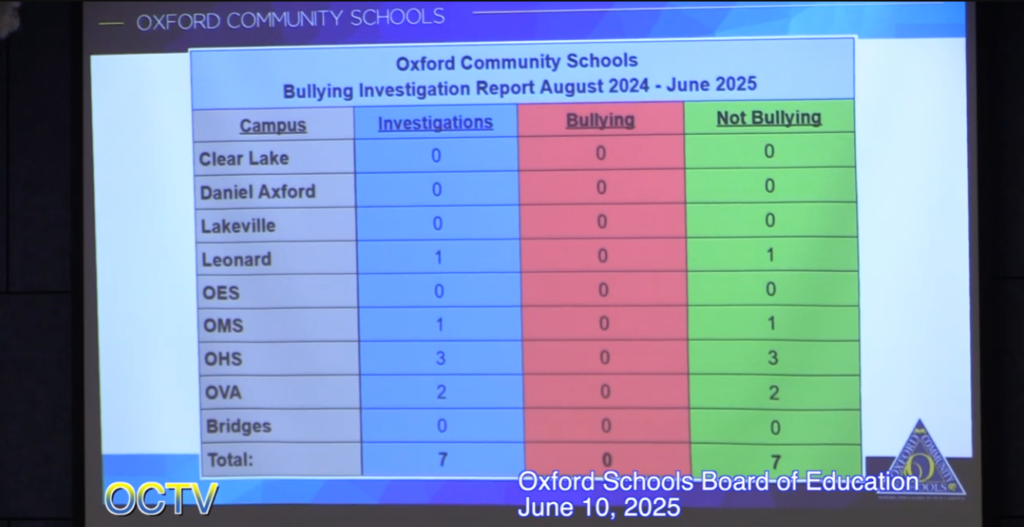
They were spread across multiple buildings. Two at OVA. Three at OHS. One at OMS. One at Leonard.
And here is the part that should stop you in your tracks.
Every single one of them was determined not to be bullying.
Zero substantiated cases. Across an entire school year. In a district where hundreds of students reported being bullied in surveys.
That is not a typo. Zero.
January 2026: Five More Investigations. One Substantiated Case.
Fast forward to January 2026.
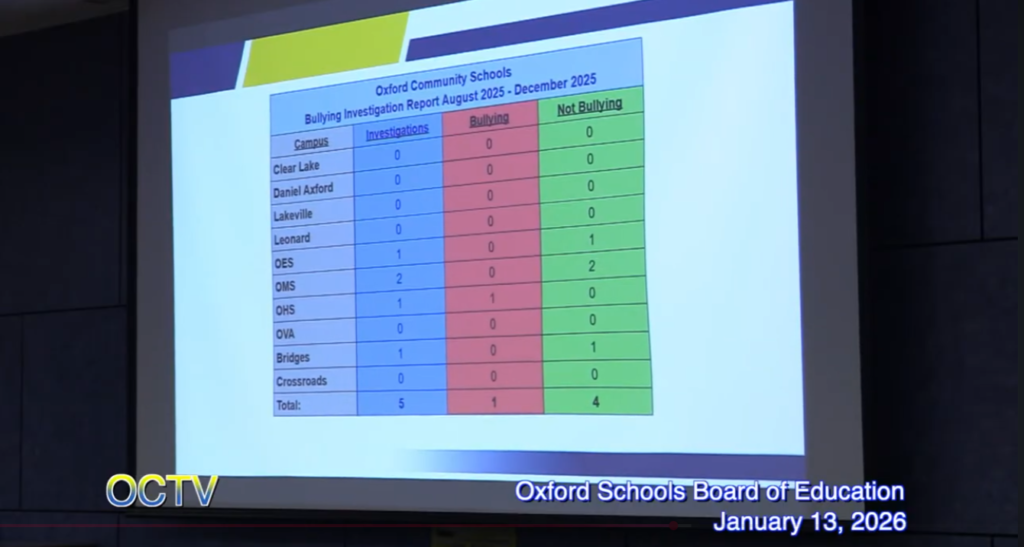
At the first board meeting of the new calendar year, bullying data was presented again, this time covering August through December of the current school year. Across the entire district, there were five bullying investigations. Only one was substantiated.
Board members immediately questioned the numbers. They said they did not align with what they were hearing from families or what they understood to be happening in schools. One board member referenced involvement in reviewing documents obtained through a community FOIA request and noted that the paperwork did not appear consistent and was not reflected in the district’s electronic reporting systems, including Raptor Student Safe or PowerSchool.
The explanation offered was that there is one approved reporting form and that principals are responsible for using it correctly and documenting incidents.
At this point, the question becomes unavoidable.
If people are reporting, why are the numbers of investigations so low, and why are so many reports unsubstantiated?
What the District Has Said About the Discrepancy
The district has acknowledged that there is a mismatch between what students report in surveys and what shows up in investigation data.
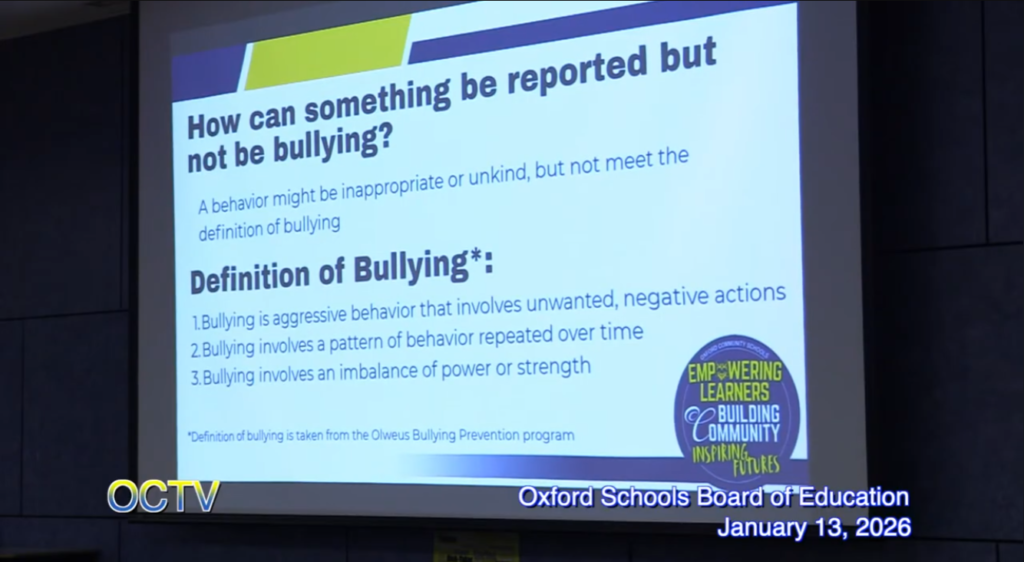
Administrators have explained that many reports do not fall under the definition of bullying. Instead, many are interpreted as peer to peer conflict. Examples were given, including situations such as a student reporting that another child did not let them have a turn on the swing. Those situations, they said, are typically handled through restorative conversations rather than formal bullying investigations.
Administrators also suggested that students may not always understand what bullying really is according to the definition being applied.
So reports are coming in. That part is not in dispute.
What happens next is where the numbers start to collapse.
Reports that do not meet every element of the definition being used are redirected, resolved informally, or reclassified before they ever become a documented bullying investigation. Once that happens, they no longer appear in the data that is ultimately reported.
This is how hundreds of student reports turn into almost no substantiated cases.
Restorative Practices Matter
There is a perspective here that many people can understand.
No one wants every single incident to immediately turn into a disciplinary record for a child. Restorative practices matter. Teaching conflict resolution, emotional regulation, and coping skills matters.
Discipline does not need to be the first step, and punishment is not the same thing as accountability.
None of that is controversial.
You Can Acknowledge Harm Without Punishment
Acknowledging bullying does not require punishment. It does not require suspensions, permanent labels, or branding a child as “a bully.”
Michigan law does not require that either.
Schools can document harm, validate the experience of the student who was affected, and choose a restorative response as the first step. In fact, MCL Section 380.1310b, referenced during the January meeting, actually encourages this.
School districts can say, “Yes, this happened. Yes, it caused harm. This is how we are addressing it, and this is what will happen if it continues.”
That approach protects students without criminalizing normal developmental behavior.
What is happening now looks different.
When Definitions Become Gatekeeping
When reports are filtered through rigid criteria and dismissed as “not bullying” because they do not meet every element of a research definition, that is gatekeeping.

Michigan’s anti-bullying statute focuses on impact. It does not require repetition, intent, or an imbalance of power. It recognizes that serious harm can occur from a single incident and that students can be harmed by peers of similar social standing. The purpose of the law is to ensure schools have mechanisms to respond to harm, not to narrow the circumstances under which harm is acknowledged.
If a child or their parent perceives harm, then harm has been done. No one else gets to decide the impact but the individual, regardless of how you scrutinize Michigan law. Listen to them when they tell you. Investigate it further. Respond appropriately.
Research-based frameworks like Olweus are useful for understanding patterns and designing prevention efforts. They were not designed to be used at intake to decide whether a student’s experience qualifies for acknowledgment or support. When those frameworks are used that way, intentionally or not, access to help becomes restricted.
Validation matters.
Being told “this was handled” is not the same as being told “this happened, and we recognize the harm.” And numbers that reflect patterns of dismissal rather than investigation do nothing to acknowledge harm.
Why People Stop Reporting
When harm is not acknowledged, people stop reporting.
When acknowledgement is absent and reporting numbers go down, that doesn’t necessarily reflect that bullying has gone down. Bullying did not stop, but reporting starts to feel pointless or invalidating. When the response becomes “this isn’t really bullying,” responsibility shifts onto the person who was harmed. It becomes about how they interpreted it, how they reacted, or how they should cope better so it does not hurt next time.
That is victim blaming, whether we use that term out loud or not.
A decline in reported bullying only looks like progress if reporting feels safe and worthwhile. Otherwise, it means people learned to stop bothering. If families do not experience acknowledgment or resolution after they report, fewer reports are not a success story. They are a warning sign.
What incentive does the district think students or parents have to keep reporting? What do they actually get out of it?
If the outcome is dismissal or silence, then disengagement is not surprising. It is logical.
Acknowledging Impact Leads to Safer Schools
People are upset.
They are upset because they keep being told, in one way or another, that what they are seeing, experiencing, and reporting does not really count.
They are upset because hundreds of reports turn into a handful of investigations.
They are upset because acknowledgment feels conditional.
If the district wants more reporting, more transparency, and more trust, the answer is not more redefining or filtering, and it is not teaching children and families why their experience does not meet the right criteria.
It starts with believing people when they tell you they have been harmed.
It starts with acknowledging impact first, then deciding how to respond.
And it starts with remembering that the goal is not to make the numbers look better on paper. The goal is to make schools safer in practice.
References:
Oxford Community Television. (2025, June 18). Oxford Schools Board of Education: 6-10-25 [Video recording]. https://www.youtube.com/watch?v=COjmfvt391E
Oxford Community Television. (2026, January 13). Oxford Schools Board of Education: January 13, 2026 [Video recording]. https://www.youtube.com/watch?v=Oy6KOHg4tN4
Stewart-Soldan, S. (2025, June 18). Oxford School District bullying trending downward. Oxford Leader. https://oxfordleader.com/articles/sports/oxford-school-district-bullying-trending-downward/
Leave a Reply